Biodiversity
It doesn’t just surround the project; it’s part of it.
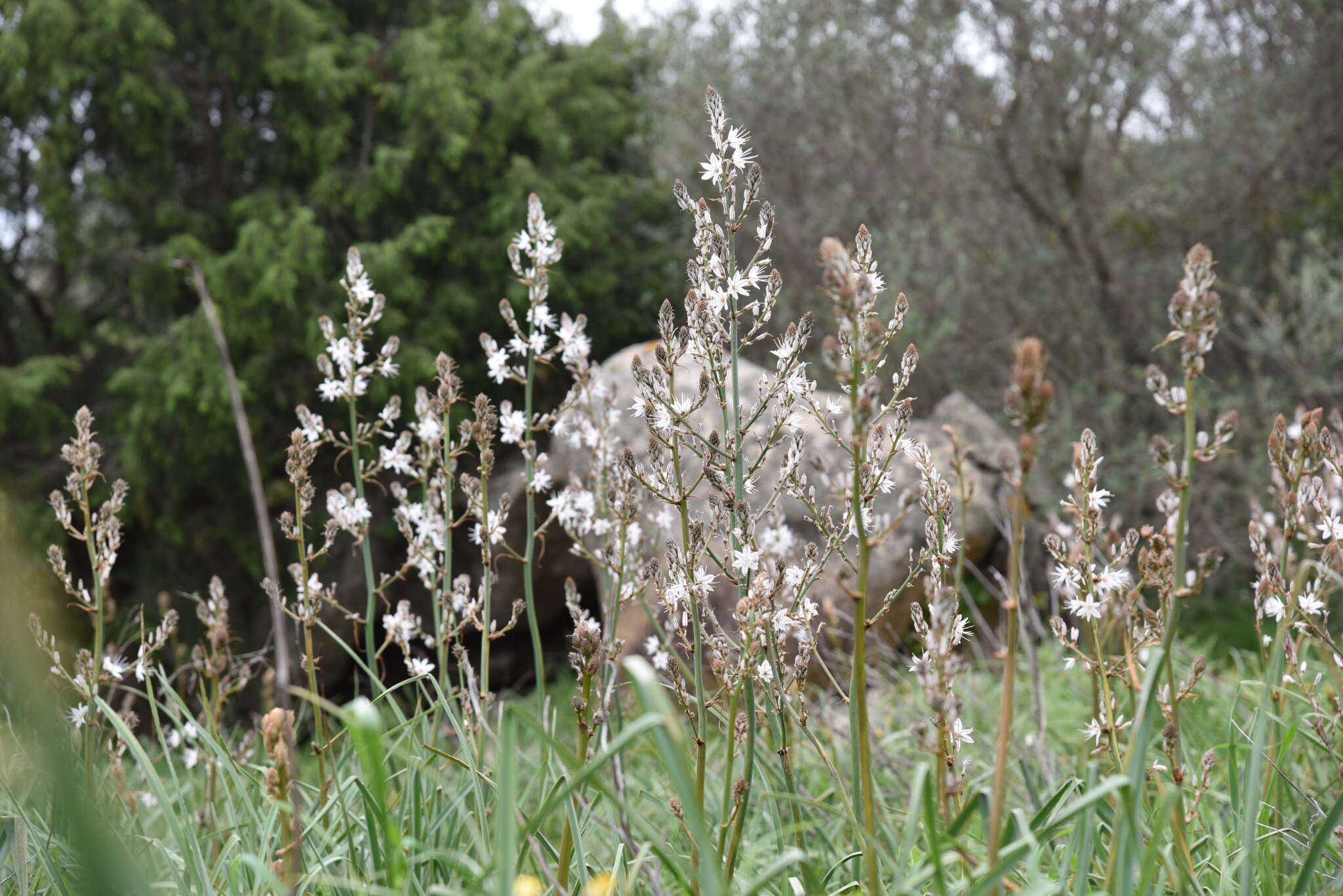
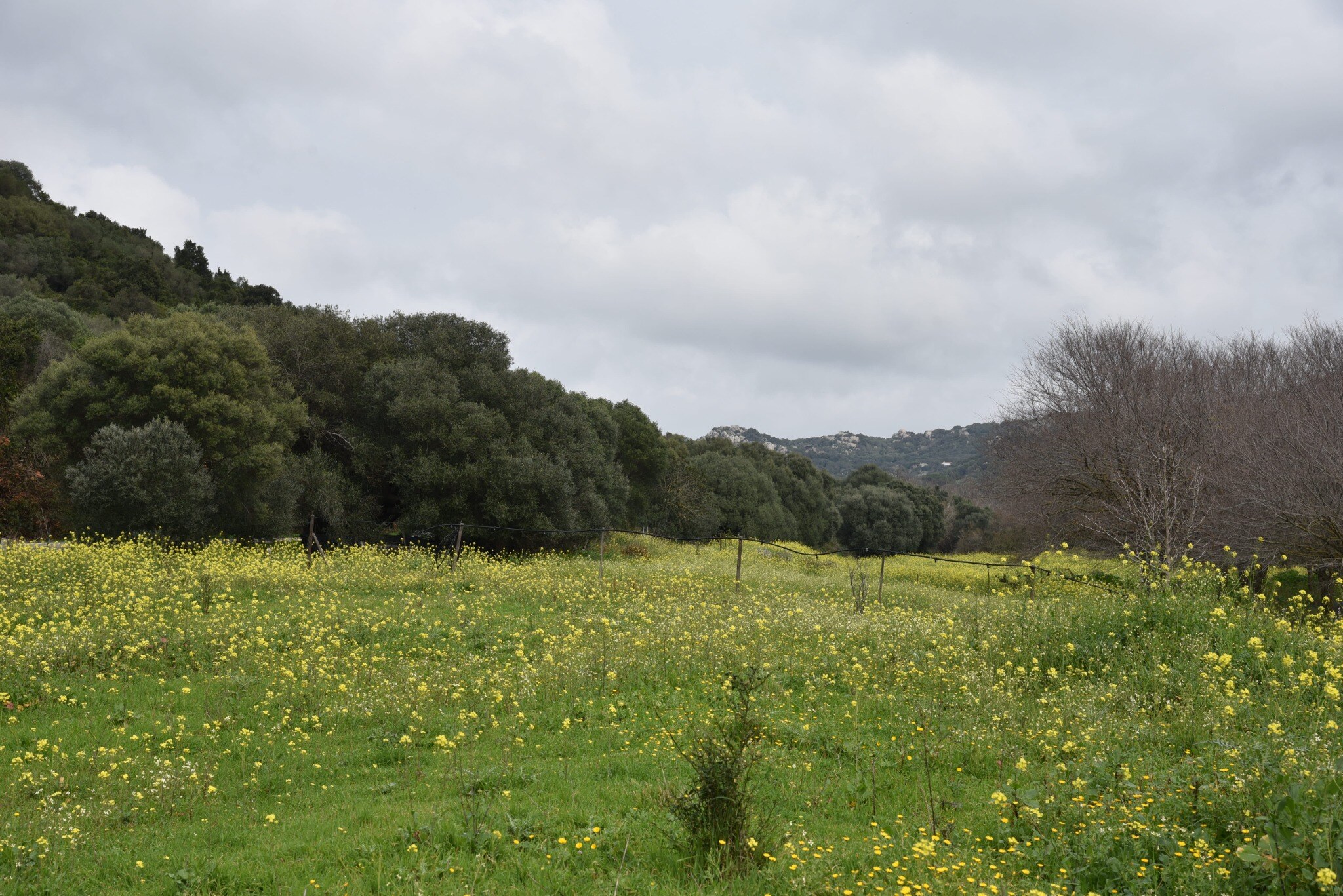
The almond orchard coexists with woodland, Mediterranean scrub, natural springs, granite rocks, wild vegetation and habitats that support local wildlife.
A biodiversity haven
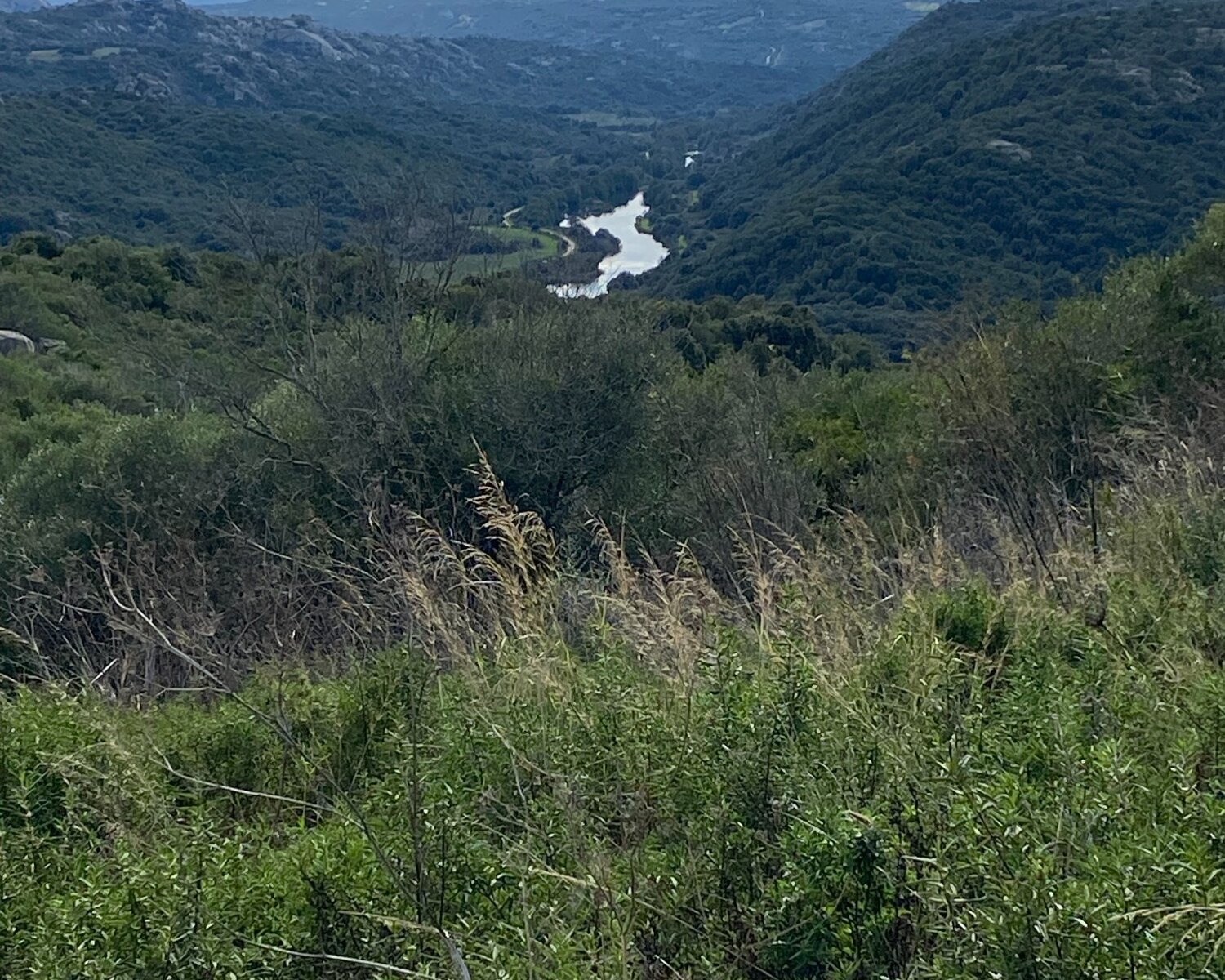
Around 100 hectares of preserved woodland, native Mediterranean scrub and natural springs coexist with plants such as strawberry trees, myrtle, sage and junipers, as well as a variety of insects.
Areas of exposed granite are preserved to maintain the landscape’s distinctive character and support biodiversity.
Bees and pollination
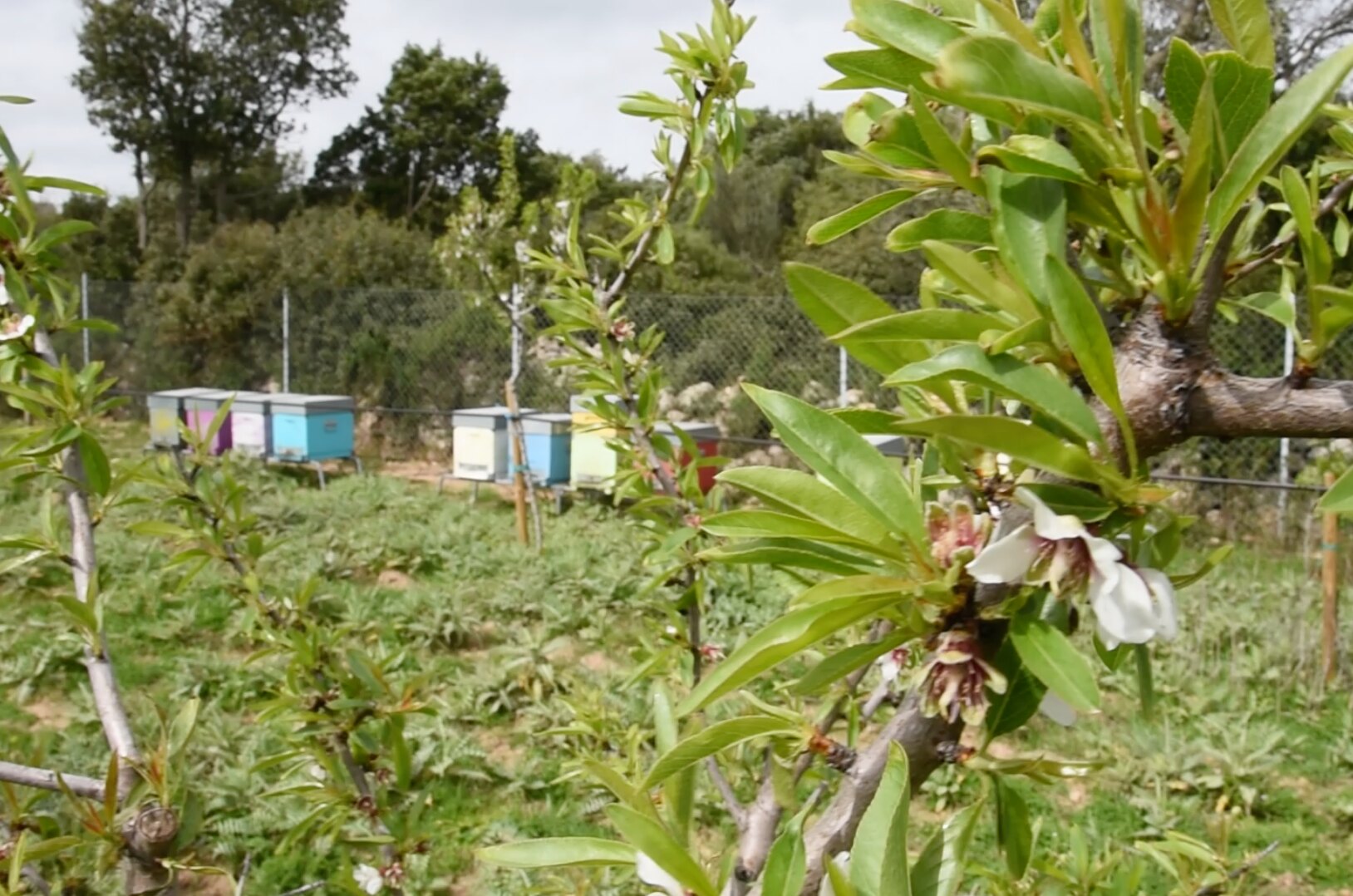
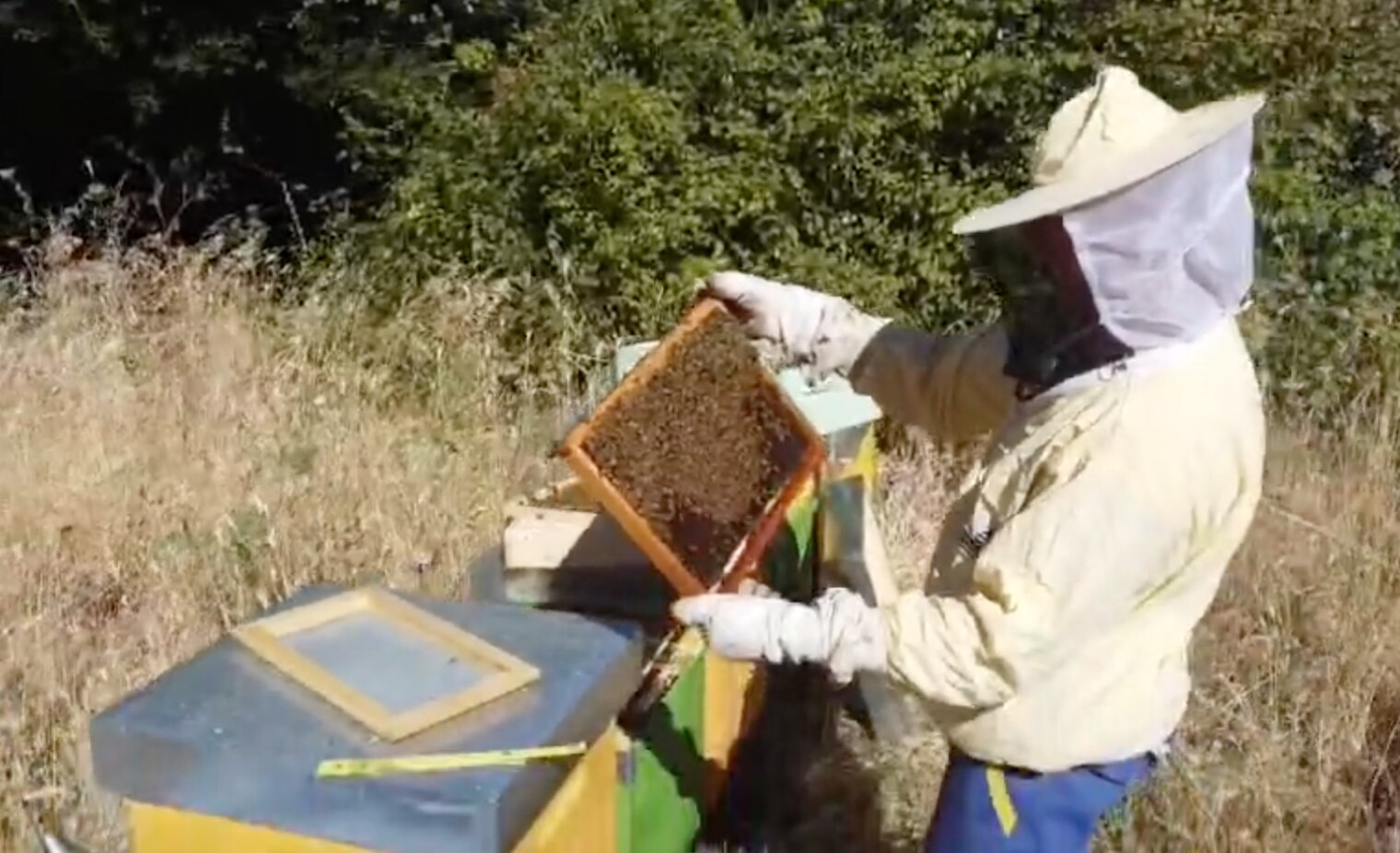
There are currently 20 beehives, with plans to gradually reach 200 at full capacity. Together with native pollinators, the bees support pollination in the almond orchard and may provide valuable insights into environmental quality.
More life between the rows
Nectar-rich plants, thriving soil
Clover, phacelia, vetch, lavender, rosemary, bird’s-foot trefoil and bay laurel provide food for pollinators, protect the soil and add organic matter. Some legumes also help fix nitrogen in the soil.